Dem Fachkräftemangel mit smarter Technologie begegnen
Künstliche Intelligenz im Handwerk – das wirkt auf den ersten Blick widersprüchlich. Werden Maschinen dann als Digitale Dachdecker eingesetzt oder fungiert ChatGPT als neuer Heizungsinstallateur?
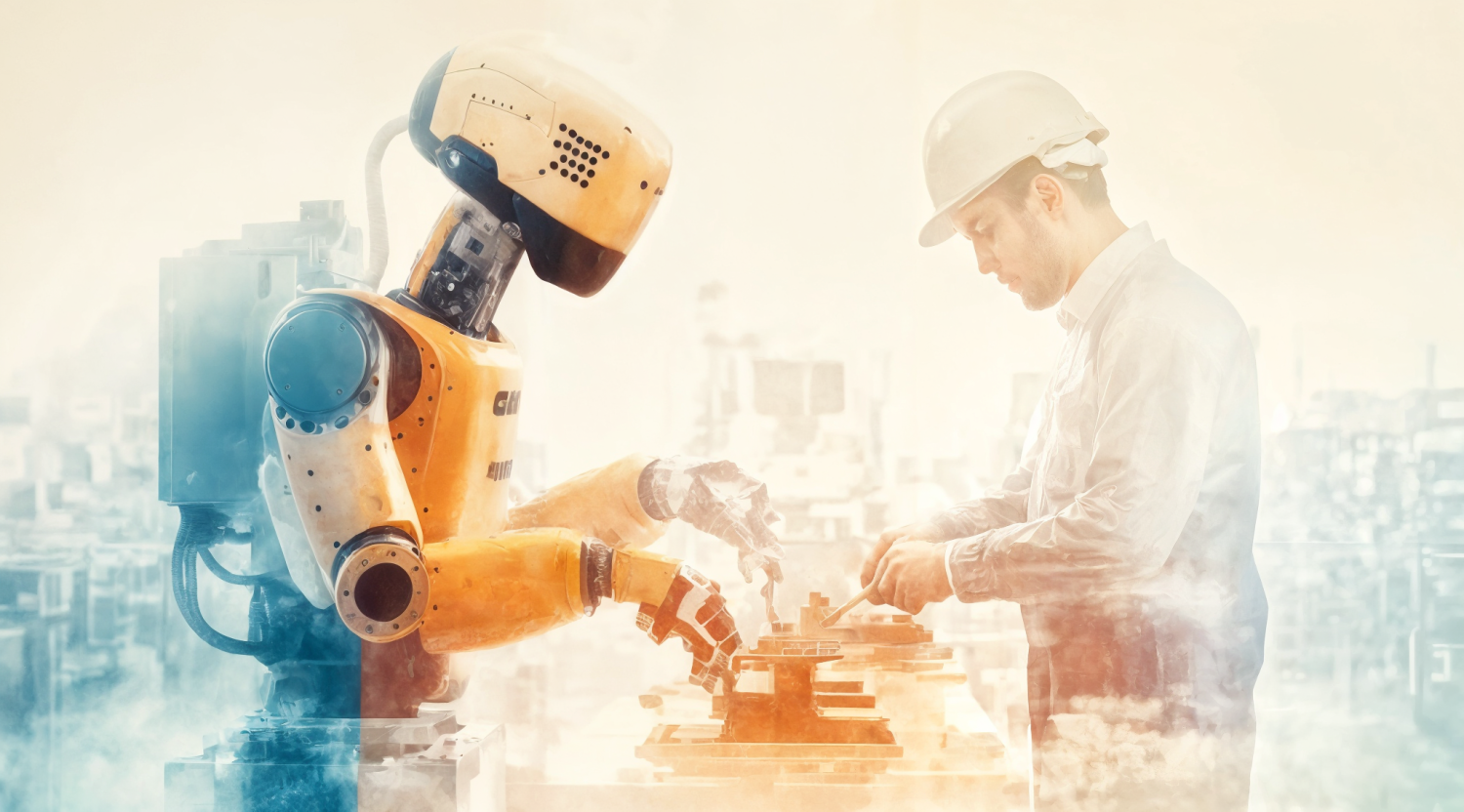
Höchstwahrscheinlich wird auch in Zukunft keine KI die händische, motorische, situationsabhängige Arbeit des Handwerks übernehmen. Es gibt allerdings spezifische Bereiche in der praktischen Arbeit, in denen KI und Roboter unterstützen können. Ein Beispiel hierfür ist die Lernende Roboterschleiftechnik für das Handwerk (LEROSH), ein deutsches Forschungsprojekt, das Robotik im Handwerk – insbesondere beim Schleifen und Polieren – nutzbar machen möchte. Monotone, immer wiederkehrende und stumpfe Arbeiten kann der Roboter übernehmen, während die menschlichen Mitarbeiter sich spannenderen Tätigkeiten widmen.
Hybride Intelligenz
Ein Stichwort, das in diesem Zusammenhang immer wieder genannt wird: Hybride Intelligenz. Es umschreibt die Zusammenarbeit und das Zusammenspiel von menschlicher und künstlicher Intelligenz. Der Begriff wird oft dort verwendet, wo die jeweiligen Stärken von Menschen und Maschinen kombiniert werden, um bessere Ergebnisse zu erzielen, als es beide getrennt könnten. Viele weitere Berufsfelder können von Hybrider Intelligenz profitieren. In der Medizin kann die KI beispielsweise bei der Diagnostik unterstützen, während der Mensch die endgültige Bewertung trifft und ethische Entscheidungen fällt.
Entlastung im Alltag – Wo KI sinnvoll unterstützt
Im Handwerk sind praktische Anwendungen wohl eher die Ausnahme. Hingegen gibt es in jedem Betrieb eine Vielzahl an bürokratischen Aufgaben. Sei es die Erstellung von Angeboten und Rechnungen, die Terminverwaltung oder die Dokumentation von Arbeitsabläufen – oft lassen sich durch den Einsatz von KünstIicher Intelligenz Zeit und Arbeitsaufwand einsparen.

Auch Chatbots und Sprachassistenten kommen zunehmend zum Einsatz in Handwerksbetrieben. Auf der Website oder bei WhatsApp können Chatbots automatisierte Antworten auf häufige Fragen geben und den menschlichen Service entlasten. Am Telefon beraten KI-Assistenten interessierte Kunden – und das ist rund um die Uhr möglich.
Großes Interesse – Zögerliche Umsetzung
Das Interesse ist groß, die Umsetzung aber noch nicht flächendeckend: In NRW nutzen oder testen 33 % der Betriebe bereits KI – zwei Drittel noch nicht. Gründe dafür sind unter anderem fehlendes Know-how, Zeitmangel und Investitionshemmnisse.
Viele Betriebe scheitern nicht an der Technik, sondern an der Überforderung mit ihr. Es ist deshalb empfehlenswert, mit kleinen Projekten zu beginnen. Das können erste Tests mit ChatGPT zur Angebotserstellung sein oder KI-basierte Tools für Terminorganisation. Hilfestellung bieten auch Initiativen wie die KIDiHa (KI im Digitalen Handwerk), die mit Selbsttests und Pilotprojekten praxisnahe Zugänge schaffen.
Empfehlenswert sind zudem Weiterbildungen durch die verschiedenen Handwerkskammern oder entsprechende Veranstaltungen.
Künstliche Intelligenz ist – besonders im Handwerk – kein Allheilmittel, aber ein wirksames Werkzeug. Wer sich ernsthaft damit auseinandersetzt, kann administrative Aufgaben effizienter lösen, Prozesse vereinfachen, Zeit und Kosten sparen und schafft damit mehr Raum für das, was das Handwerk ausmacht: Kreativität, Präzision und Nähe zum Kunden.