The latest Shell Youth Study shows that young people in Germany are less and less afraid of unemployment or not finding an apprenticeship. This figure now stands at 35% of respondents compared to 39% in 2019, while other social problems are causing greater anxiety, such as the war in Europe, the poor economic situation and climate change. This shift in concerns is also a reflection of changes in the training and labor market.

The development fits in well with the trends on the labor market. The figures reflect the shift from an employer to an applicant market. Companies are having increasing problems finding suitable trainees. According to the IAB company panel, 35% of training places remained unfilled in 2023 - a record figure that illustrates the challenge of recruiting qualified young talent. Companies are also noticing that the younger generations have different requirements in terms of working environments and career prospects, which increases the pressure to position themselves as an attractive employer.
Despite these difficulties for companies, there is a growing discrepancy on the part of young people between their wishes and the training places on offer: The number of young people who are unable to find a training place is also increasing. This shows that the training on offer does not match the expectations and skills of many young people. In addition to the shortage of skilled workers, the structural discrepancy between the supply of and demand for training is thus becoming a key challenge.
Practical reference in the education system
In line with this, young people want more practical relevance and better preparation for the world of work in the education system. Many young people feel that their school or university education does not adequately prepare them for the actual professional requirements. There is a clear need for action here on the part of politicians and educational institutions. Closer links between schools and training companies could, for example, provide insights into real work processes and expectations and at the same time broaden the range of career choices.
A continuing trend also shows that more and more young people are opting for a degree course or dual training. As a result, the attractiveness of many traditional apprenticeships continues to decline. Poor working conditions, unattractive salary levels and limited career opportunities are key reasons that make vocational training less appealing to many young people. Companies could provide a positive incentive here by investing in better working conditions and future prospects for training graduates. Initiatives that emphasize the social importance of traditional professions could also improve the image of these professions in the long term.
The right (online) marketing
It also shows that companies need to adapt their marketing strategies in order to reach young people looking for training at all. In times of digital dominance, it is often no longer enough to be present through traditional channels such as job advertisements or career information days. Nowadays, it is therefore essential to use the central channels for training marketing. This is exactly what KÖNIGSTEINER digital does every day. With this expertise, we support customers from all sectors in finding suitable employees and trainees.
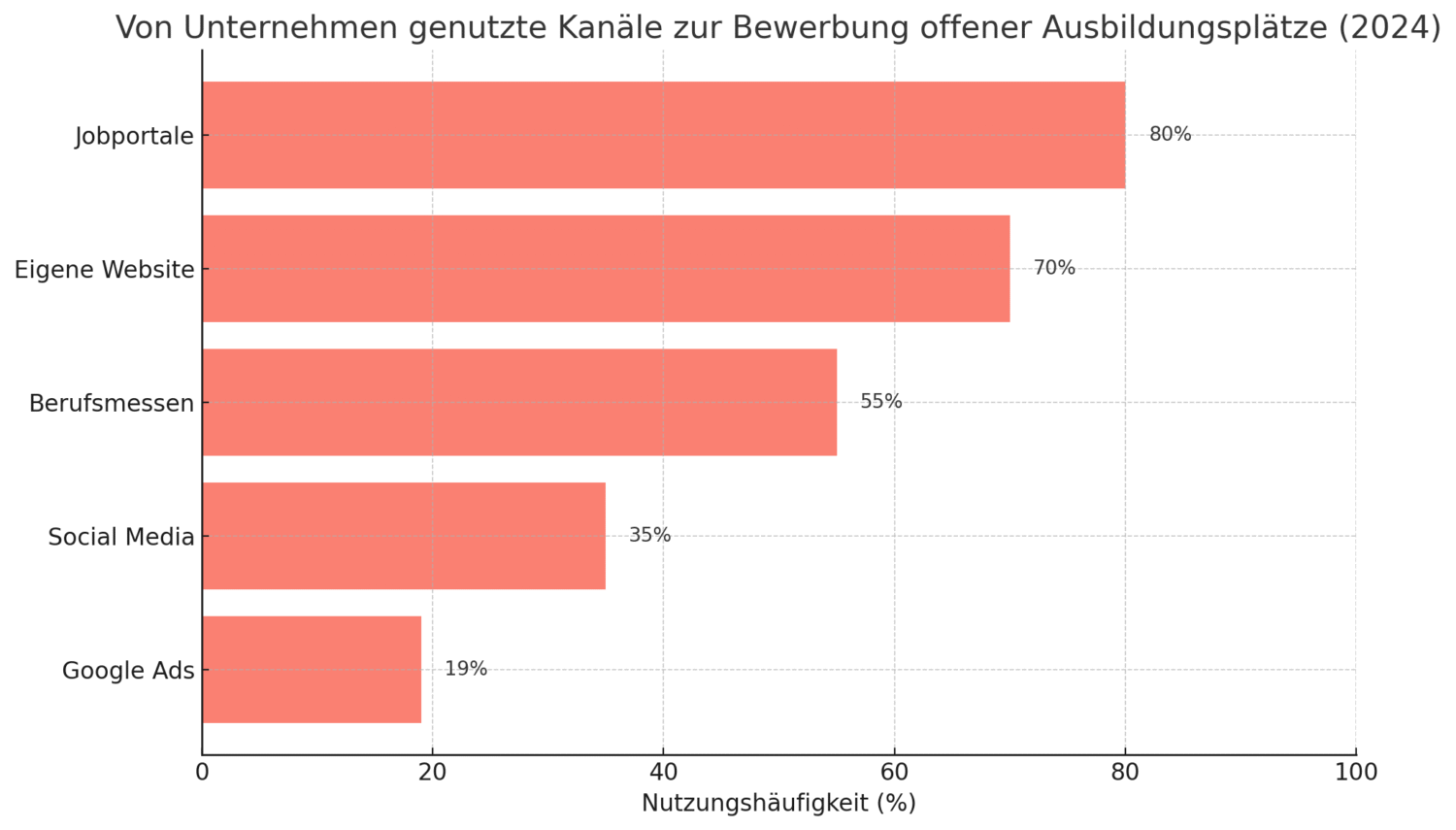
A survey by wirAUSBILDER on the topic of trainee recruiting trends 2024 shows that Google is the most important channel for trainee searches. Of the young people surveyed, 83% stated that they use the search engine "very often" or "often" in their searches. In contrast, 81% of the training companies surveyed "do not use Google Ads at all" or "rarely" to advertise vacancies. A clear indication of a lack of understanding of how to address target groups in the digital space.
The situation is similar in the area of social media. Although platforms such as TikTok, Instagram and the like are rarely used specifically to search for apprenticeships, they offer a wide reach due to their proximity to the target group and their usage behavior. This gives companies the opportunity to increase their attractiveness with creative and authentic content and to convey a realistic picture of apprenticeships.
Even in 2024, it will remain a huge challenge to fill apprenticeship positions in many sectors. In order to counteract this development, changes are needed on several levels. In the political and social spectrum, the attractiveness of shortage occupations in particular should be increased. In school-based training, greater practical relevance and better opportunities for vocational orientation are desirable. Companies themselves can make their apprenticeships more interesting and attractive. In order to find suitable trainees, they should above all advertise where young people spend time and obtain information.
Sources:
All images from Freepik