The latest figures from the working time accounts, which are regularly published by the Institute for Employment Research, show a change in the structure of the German labor market. For the first time since coronavirus, the volume of work has fallen again. In 2024, it amounted to 61.37 billion hours, 0.1% lower than in the previous year.
The number of full-time employees has also fallen. At 25.58 million, it has fallen by 0.2%. However, the number of part-time employees has risen significantly. It amounted to 16,728 million in 2024, an increase of 1.2%.

The decline is understandable given the tense economic situation in recent years. Despite a shortage of skilled workers in many sectors, numerous jobs have been cut in Germany - particularly in the beleaguered industrial sector - as there has been a lack of secure prospects to date. Experts hope that this trend will be reversed as a result of the financial boost that has now been approved, which will allow more investment.
There are other reasons for the decline in the volume of working hours. These include the much-described demographic change, as we have reached a phase in which the baby boomers are increasingly leaving the labor market. In addition, part-time sectors such as healthcare and nursing are continuing to expand.
Keyword part-time: The situation of women on the labor market has a considerable influence on the total volume of working hours - both directly through their participation in the workforce and indirectly through structural changes in the labor market. The employment rate of women has risen continuously in recent decades. Theoretically, this should lead to a higher volume. However, as many women work part-time more often than average, this effectively results in a decrease.
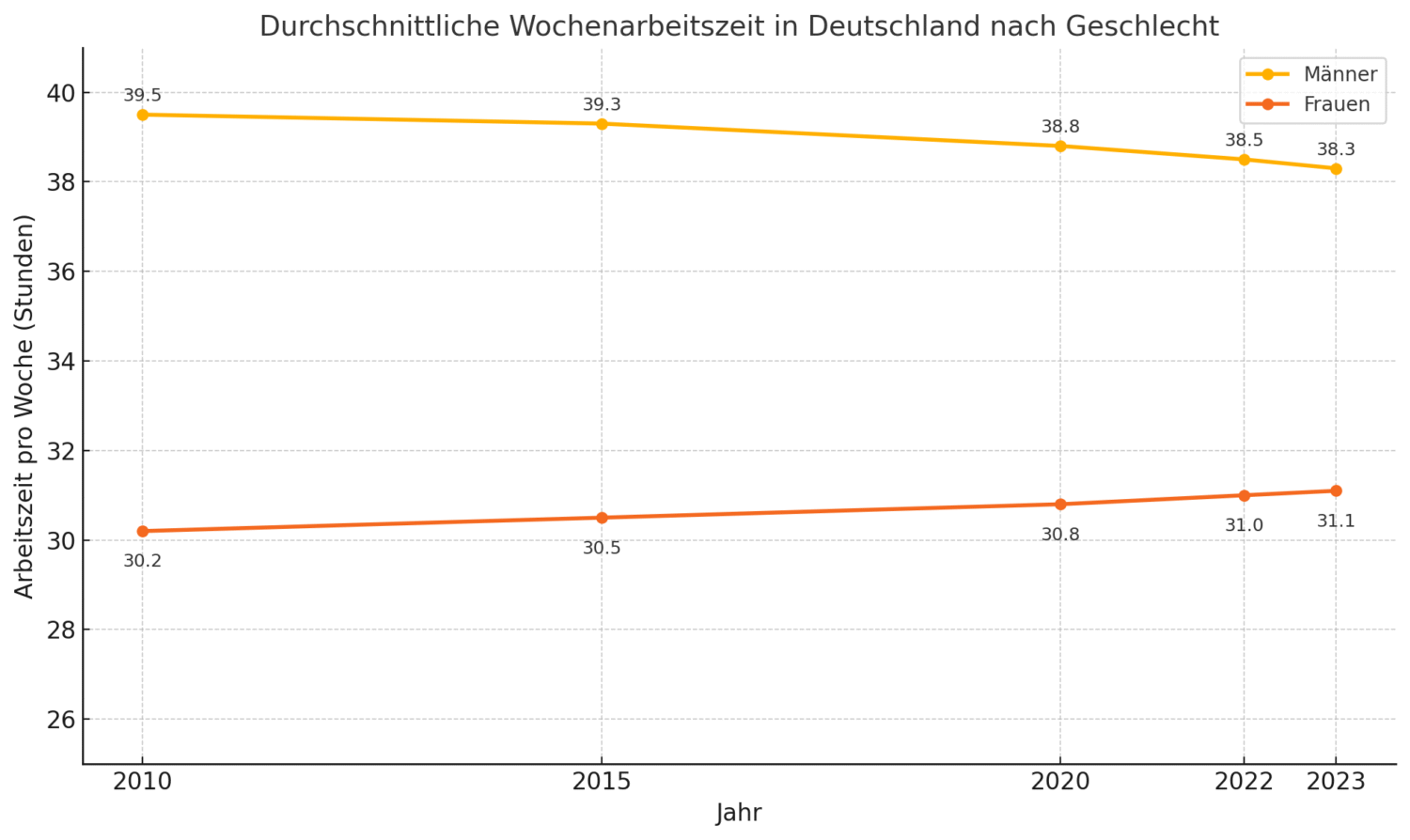
To a large extent, this is due to structural conditions. For example, women still perform a higher proportion of care work. With improved childcare services, family-friendly working time models and a more even distribution of care work, the working time potential of women could be exploited much more efficiently.
Sources:
Alarm clock from Freepik